
Introduction
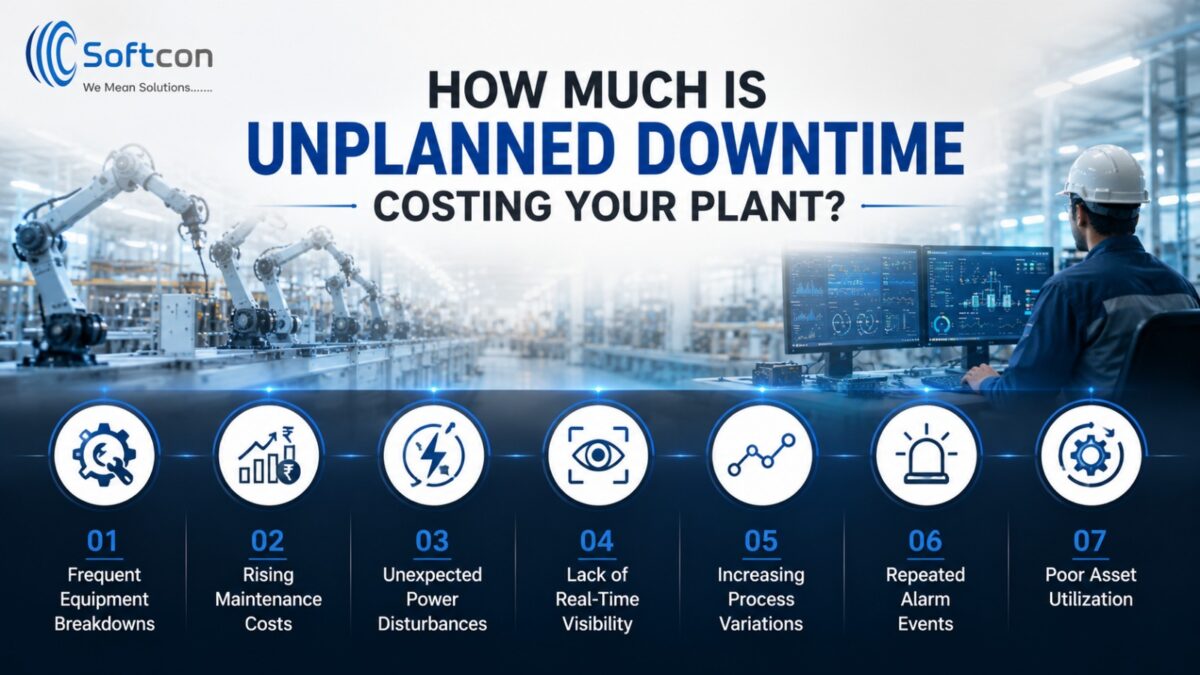
Unplanned downtime is one of the most expensive challenges faced by manufacturing plants today. Whether caused by equipment failures, power disruptions, process inefficiencies, or maintenance issues, unexpected shutdowns can lead to significant production losses, increased operational costs, and reduced profitability.
According to industry studies, even a few hours of downtime can cost manufacturers thousands—or even millions—of rupees in lost production and maintenance expenses.
The good news? Most downtime events provide warning signs before they occur.
In this blog, we’ll explore seven critical warning signs that indicate your plant may be heading toward costly unplanned downtime and how industrial automation, predictive maintenance, and real-time monitoring can help prevent it.
1. Frequent Equipment Breakdowns
If machines are failing more often than usual, it is a clear indication that equipment health is deteriorating.
Common causes include:
- Mechanical wear and tear
- Aging assets
- Lack of preventive maintenance
- Improper operating conditions
Implementing predictive maintenance solutions and condition monitoring systems can help identify potential failures before they disrupt production.
2. Rising Maintenance Costs
Are maintenance expenses increasing every quarter?
Constant emergency repairs often indicate that the plant is operating in reactive maintenance mode rather than preventive maintenance mode.
Using Industrial IoT (IIoT), SCADA systems, and maintenance analytics can help reduce repair costs and improve equipment reliability.
3. Unexpected Power Disturbances
Power fluctuations, voltage dips, load imbalances, and frequent tripping events can significantly impact plant operations.
Warning signs include:
- Frequent generator trips
- Power quality issues
- Load shedding events
- Electrical equipment failures
Advanced Power Management Systems (PMS) and Energy Monitoring Systems (EMS) provide real-time visibility and automated control to minimize downtime caused by power-related issues.
4. Lack of Real-Time Visibility
If operators rely on manual reports or delayed information, critical issues may go unnoticed until they become major problems.
Without real-time monitoring, organizations struggle to:
- Identify performance bottlenecks
- Detect abnormal conditions
- Respond quickly to faults
SCADA systems and centralized dashboards provide complete plant visibility, enabling faster and more informed decision-making.
5. Increasing Process Variations
Frequent process deviations often indicate underlying equipment or control system issues.
Examples include:
- Temperature fluctuations
- Pressure instability
- Flow inconsistencies
- Product quality variations
Modern PLC, DCS, and automation solutions help maintain process stability and reduce production interruptions.
6. Repeated Alarm Events
When operators continuously receive the same alarms, it may indicate unresolved equipment or process issues.
Ignoring recurring alarms can result in:
- Equipment damage
- Production losses
- Safety incidents
- Extended downtime
Alarm management systems and advanced analytics help prioritize critical alerts and enable proactive maintenance.
7. Poor Asset Utilization
If plant assets are not operating at their designed capacity, productivity and profitability suffer.
Common indicators include:
- Reduced production output
- Excess idle time
- Low Overall Equipment Effectiveness (OEE)
- Increased energy consumption
Industrial automation solutions improve asset utilization through real-time monitoring, performance tracking, and intelligent operational control.
How Automation Helps Reduce Unplanned Downtime
Modern industrial automation technologies help manufacturers move from reactive operations to predictive and proactive maintenance strategies.
Key technologies include:
- SCADA Systems
- PLC & DCS Solutions
- Industrial IoT (IIoT)
- Predictive Maintenance Platforms
- Energy Management Systems
- AI-Based Analytics
These solutions enable early fault detection, real-time visibility, improved reliability, and optimized plant performance.
Conclusion
Unplanned downtime rarely occurs without warning. Frequent breakdowns, rising maintenance costs, power disturbances, process instability, and poor visibility are all indicators that require immediate attention.
By leveraging industrial automation, predictive maintenance, and real-time monitoring solutions, organizations can reduce downtime, improve operational efficiency, and maximize plant productivity.
The sooner these warning signs are addressed, the greater the opportunity to improve reliability, reduce costs, and maintain a competitive advantage in today’s industrial landscape.


